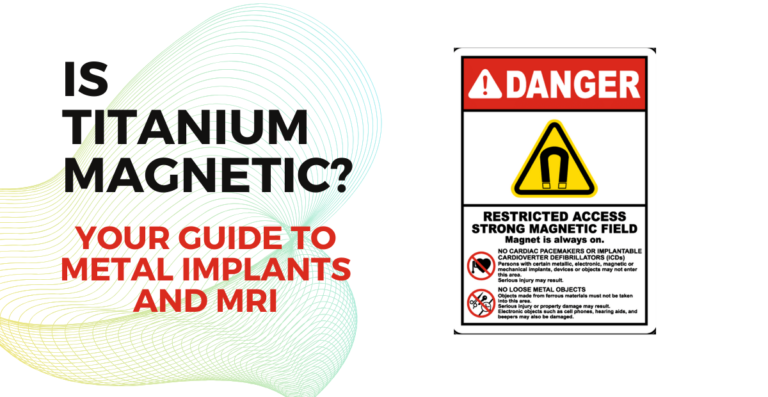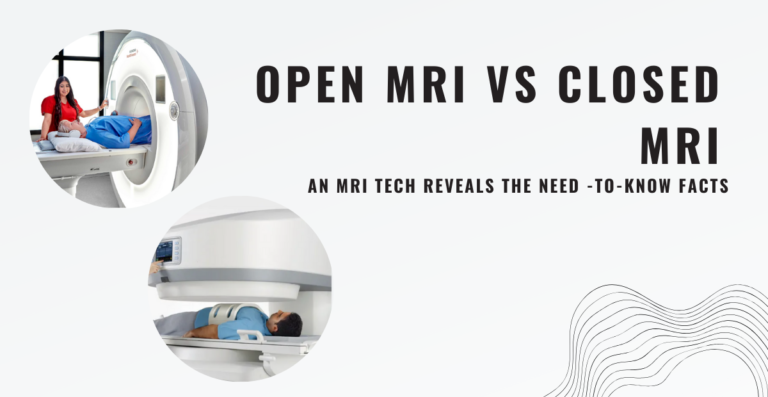
Can you get an MRI with a pacemaker or IUD? What about a hip replacement, or a recent tatoo?
If you’ve searched any version of that question, you’ve probably landed on one hospital’s general radiology page or one provider’s FAQ section — and neither one is written to give you the full picture.
As a certified MRI Technologist who has screened thousands of patients for implant safety before they ever reach the scanner, I can give you the honest version: there’s no single yes or no.
There’s a real classification system behind every one of these answers. Only certain professionals, such as MRI Technologists or Radiologists are trained to decide what implants can be scanned.
I can show you exactly how that system works and where your device likely falls — just know the final call on your specific device always belongs to your scanning facility, your doctor, and the radiologist reading your results.
Let’s start with the three categories every implant gets sorted into before anyone decides you’re getting scanned.
Table of Contents
The Three Categories That Actually Decide the Answer
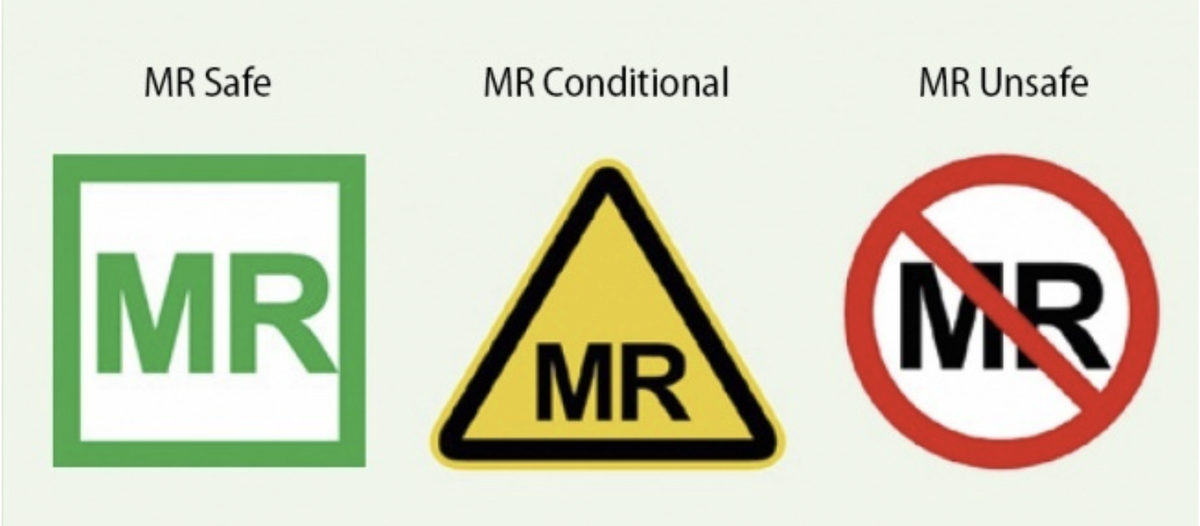
Every implant and medical device gets sorted into one of three categories before anyone decides whether you’re getting into that scanner. The system comes from ASTM International, the organization that sets safety testing standards for a huge range of medical equipment.
Their standard, ASTM F2503, replaced an older and more confusing labeling system back in 2005, and it’s what manufacturers, hospitals, and imaging centers use today.
Think of it like a traffic light. Green means go, no conditions attached. Yellow means proceed, but only if specific rules get followed. Red means stop, full stop, no exceptions.
MR Safe
This is your green light. An item earns this label when it poses no known hazard in any MR environment, at any field strength, under any conditions.
To qualify, the device or implant has to be non-metallic, non-magnetic, and unable to conduct electricity. A plastic surgical clip is a good example.
If your implant falls under this category you can get scanned.
MR Conditional
This is your yellow light, and it’s where most modern implants actually live. An item gets this label when it’s been tested and shown to be safe, but only within specific, defined conditions.
Those conditions might include a maximum field strength (1.5T versus 3T matters here), a required body position, or in some cases, active monitoring during the scan itself. A newer pacemaker model is the classic example. It’s not a blanket yes. It’s a yes, if certain boxes get checked first.
If your implant falls under this category, you are very likely to get scanned. It may mean you need to get scanned at a facility that can accomodate the special requirements. It may mean your technologist will have to change some MRI sequences.
- some pacemakers
- most cardiac stents
- most aneurysm clips
MR Unsafe
This is your red light. An item earns this label when it’s known to pose a hazard in any MR environment. Older aneurysm clips made from certain metals fall into this category.
A lot of unsafe implants contain ferromagnetic material that will attract strongly to the magnet. Other examples are devices that have electrical wires. The MRI can cause currents to be induced in electronics and wires, which can cause burns.
Typical examples:
- Cardiac pacing wires
- Insulin Pumps
- Breast tissue expanders
- Ferromagnetic aneurysm clips
So does this apply to your device?
That depends entirely on which category it lands in, and that’s not always obvious from the outside. Two devices that look and function almost identically can carry completely different labels depending on their materials, their manufacturer, and even the specific model number.
This is exactly why “is my implant MRI safe” doesn’t have one universal answer. It has three possible answers, and the right one depends on details most people never think to check.
Tech Insider Note:

This is why your MRI Technologist is so nosy and thorough regarding your medical history. Particularly if you have a history of injury to the eyes involving metal.

Ferromagnetic (iron) and some paramagnetic metals (like aluminum alloys) can torque and move during the MRI.

This can cause mechanical injury to the eye and surounding tissue. Also, metals can heat up risking burns.
Overall, this classification system is the real backbone behind every implant question in this article, from pacemakers to IUDs to tattoos. Once you know which category something falls into, everything else gets easier to figure out.
There’s one more wrinkle worth clearing up before we get into specific devices, though. The exact same device can carry a different status depending on which side of the US-Canada border you’re getting scanned on.
One Standard, Two Countries: What’s Actually Different Between the US and Canada
The classification system I just walked you through, MR Safe, MR Conditional, MR Unsafe, isn’t a US-only thing. ASTM International sets that standard, and it gets used by manufacturers selling devices in Canada, the US, and plenty of other countries.
So the underlying science behind whether your specific device is safe in an MRI environment doesn’t change depending on which side of the border you’re on.
What does change is who approves the device for sale in the first place, and that’s where things get less consistent.
In the US, the FDA reviews and clears medical devices before they hit the market. In Canada, that job belongs to Health Canada, and their review process runs on its own timeline, with its own requirements.
The same pacemaker or implant model can be approved and labeled as MRI Conditional in one country well before it clears the equivalent process in the other. Sometimes it’s the reverse.
Either way, a device that’s confirmed safe under a specific protocol in the US isn’t automatically confirmed under the same protocol in Canada, even if it’s the exact same manufacturer and model name.
There’s also a second layer worth knowing about if you’re scanning in Canada. Health Canada publishes its own radiofrequency exposure guidelines, called Safety Code 6.
Canadian facilities generally follow that instead of the American College of Radiology guidance that most US facilities use.
In practice, the two are similar in spirit. They’re just not the same document, issued by the same body, on the same schedule.
So what does this actually mean for you?
If you’re in Canada and you’ve found information online about your device’s MRI status, double check that the source is actually talking about your device’s approval status in Canada specifically, not just in the US.
A US provider’s FAQ page, a US-based Facebook group, or a US pacemaker manufacturer’s website might be describing a device status that hasn’t caught up on the Canadian side yet, or one that was cleared in Canada earlier than it was in the US. Either direction is possible.
With that groundwork in place, let’s dive into the different device categories.
Implant Categories
Pacemakers
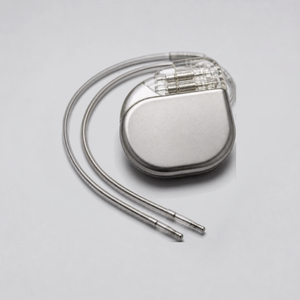
If there’s one implant question that gets treated like a simple yes or no, and shouldn’t be, it’s this one.
Pacemakers and implantable cardioverter defibrillators (ICDs) get grouped together here because, for MRI safety purposes, they function almost identically.
Both are active electronic devices with leads running into the heart, and both carry the same set of considerations once you’re talking about getting scanned.
For a long time, the standard answer to “can I get an MRI with a pacemaker” was simply no. That wasn’t overcaution for the sake of it. Older devices genuinely weren’t tested or built to withstand an MRI environment, and the risks were real: lead heating, device malfunction, movement of the device itself.
That’s changed, but not as completely as some headlines make it sound. Newer pacemakers and ICDs are now commonly manufactured and labeled as MR Conditional. That’s real progress. It also doesn’t mean every pacemaker patient today gets an automatic yes.
Here’s what “conditional” actually requires in this category:
Field strength: Most conditional cardiac devices are only cleared for 1.5T scanners, not 3T.
Waiting period: Many devices require a set amount of time after implantation, often six weeks, before an MRI is considered.
Reprogramming: The device typically needs to be switched to a specific mode before the scan and switched back afterward.
Monitoring: Someone trained in both MRI safety and cardiac life support usually needs to be present for the scan itself.
There’s also the legacy device problem.
Millions of people still have pacemakers and ICDs that were implanted before conditional labeling became standard, and an estimated 50 to 75 percent of pacemaker patients will need an MRI at some point during the life of their device.
Some research has shown that even non-conditional legacy devices can sometimes be scanned safely under a carefully controlled hospital protocol. Here is another study done that came to similar conclusions.
That’s promising, but it’s also very setting specific, which is exactly why this isn’t something you can settle by reading a device label at home.
Overall, if you have a pacemaker, the real question isn’t “are pacemakers MRI safe.” It’s “what generation is my specific device, and what protocol does it require.” Those are two very different questions, and only one of them has a useful answer.
Stents
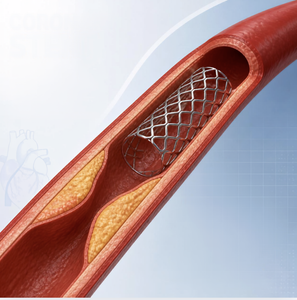
A stent small metal or metal-alloy scaffold that holds a blood vessel open, and for MRI purposes, that distinction matters enormously.
Modern coronary and peripheral stents are made from non-ferromagnetic materials.
That means they don’t get pulled or heated by the MRI’s magnetic field the way older, different metals might.
Because of that, the vast majority of stents in use today are labeled either MR Safe or MR Conditional, and the conditional ones tend to have very manageable conditions attached.
Here’s the part that surprises people. For years, patients were told to wait six to eight weeks after getting a stent before having an MRI, to give the vessel time to heal around it. That guidance has since been walked back.
Research has shown that scanning within days of stent placement, even under two weeks, carries no meaningful added risk in most cases. Postponing the scan turned out to be a precaution nobody actually needed.
There is one caveat worth naming.
A small number of peripheral stents contain materials that are weakly magnetic. Those get evaluated on a case-by-case basis rather than getting a blanket immediate green light. This is exactly the kind of detail that depends on the specific stent you have, not stents as a category, so it still needs a quick confirmation from whoever’s doing your scan.
Implantable Cardiac Defibrillators (ICDs)
An ICD looks a lot like a pacemaker from the outside, and it does share the same basic pacing function.
The difference is what happens when your heart rhythm goes seriously wrong. A pacemaker keeps a slow heart beating steadily.
An ICD does that too, but it’s also built to detect a dangerous, fast heart rhythm and deliver an electric shock to stop it. That extra job is exactly what makes ICDs and MRI a slightly different conversation than pacemakers and MRI, even though the two devices get grouped together constantly.
Here’s the specific concern. An MRI scanner creates a strong magnetic and radiofrequency environment, and there’s a real risk that an ICD could misread that environment as a dangerous arrhythmia.
If that happens and the shock function is still active, the device could fire a shock the patient doesn’t actually need. Nobody wants that happening while someone’s lying still inside a scanner.
So the protocol for ICDs adds one more required step beyond what a pacemaker needs:
Pacing settings still get adjusted, the same way they would for a pacemaker patient, depending on whether the patient is pacing-dependent.
Tachyarrhythmia detection and shock therapy get temporarily disabled before the scan starts, then turned back on immediately after.
A magnet alone isn’t enough. With a pacemaker, placing a magnet over the device can sometimes shift it into a safer mode on its own.
With an ICD, a magnet only suspends the shock function. A patient who depends on the pacing function still needs the device properly reprogrammed.
Korantzopoulos et al. built a review specifically because clinicians tend to treat “magnet on pacemaker = asynchronous mode” and “magnet on ICD = shock therapy off” as universal rules.
Actually, in practice the response depends on the device type, manufacturer, and model, and can differ substantially between them.
So the bottom line is, whether you have an ICD or a pacemaker, it comes down to the make, model, and manufacturer specs.
Overall, if you have an ICD, the device-specific question your facility needs answered isn’t just “what field strength can this handle.” It’s “is the shock function safely disabled for this scan, and by whom.” That’s not a step you can skip or a detail worth guessing on.
Shunts and Valves
Heart Valves and Shunt Valves: Two Very Different Kinds of “Valve”
These two get grouped under one word, “valve,” but they don’t have much else in common. One sits in your heart and just needs to open and close.
The other sits under your scalp and has a dial that can accidentally get turned. Worth walking through separately, even in the same section.
Prosthetic Heart Valves
Mechanical and bioprosthetic heart valves are made from materials like titanium and Elgiloy, neither of which is magnetic.
Because of that, most facilities consider virtually all implanted heart valves and annuloplasty rings MR conditional at 1.5T and 3T.
Even old stainless steel valves from decades ago carry no known risk. If you’ve had valve replacement surgery, this is genuinely one of the more settled categories on this whole list.
Programmable Shunt Valves
A shunt itself, the tubing that drains excess cerebrospinal fluid, isn’t the concern. The concern is the valve.
Many shunts use a programmable valve that a neurosurgeon sets to a specific pressure, and that valve typically contains small magnets to allow adjustment without another surgery.
Here’s what that means for MRI.
A radiographic reference study covering the four major shunt valve manufacturers, Codman Hakim, Medtronic Strata, Sophysa, and Aesculap Miethke, found that every one of them is considered compatible with MRI up to 3T according to the manufacturers’ own product literature.
The catch is in the fine print. Every single manufacturer also advises checking the valve’s setting immediately after the scan, because inadvertent changes are a known possibility, not a rare fluke.
And it’s not rare. A study reviewing over 200 MRI exposures in patients with programmable shunts found the setting actually changed afterward more than half the time.
Higher field strength made it more likely, and the specific valve brand mattered too.
Other research has found similar results, with one study on Hakim-Codman valves specifically putting the alteration rate at 40 percent at 1.5T alone.
The valve setting gets checked before the scan, so there’s a documented baseline.
Higher field strength increases risk, so 1.5T is generally preferred over 3T for these patients when there’s a choice.
The setting gets checked again immediately after, typically with a quick skull X-ray, and reprogrammed back if it shifted.
IUDs and Hormonal Implants

IUDs
There are two different types in common use, and they don’t behave the same way in an MRI, so it’s worth separating them by material rather than treating “IUD” as one category.
Hormonal IUDs (Mirena, Kyleena, Skyla, Liletta) are made entirely of plastic, with no metal components anywhere in the device. Because there’s genuinely nothing for the magnetic field to interact with, these qualify as MR Safe at any field strength, full stop.
This is one of the few devices on this entire list that earns the strict, no-conditions-attached label.
Copper IUDs (Paragard) are a different story.
Paragard contains copper wire wrapped around the plastic frame, and while copper isn’t magnetic, it is still metal. That distinction matters for the classification. Paragard’s own FDA label states that patients can be safely scanned with MRI only under certain conditions, which places it in the MR Conditional category rather than MR Safe.
In practice, those conditions are minimal. Testing has confirmed copper IUDs are safe at 1.5T, and this has held up across multiple copper-containing IUD models, not just Paragard specifically.
At 3T, a study has shown that it may be possible for a copper IUD to dislocate during the scan. So it is recommended to have the IUD placement checked out by a gynecologist after the scan.
The one thing worth remembering is that “IUD” isn’t automatically MR Safe as a blanket category. It depends on whether copper is involved, and if it is, that’s Conditional, not Safe, even though the actual restriction barely changes what happens on scan day.
Hormonal Implants
Birth control implants (Nexplanon) follow the same logic as hormonal IUDs. It’s a small plastic rod, and while newer versions include a bit of barium sulfate so it shows up on an X-ray, that’s not a metal that interacts with an MRI’s magnetic field.
It carries the same MR Safe status as the hormonal IUD family.
Aneurysm Clips

This category exists in a different tier than most of what we’ve covered so far, and it’s worth understanding why before getting into the details.
Aneurysm clips are surgical clips placed on a blood vessel in the brain to treat an aneurysm, and depending on the exact metal they’re made from, they can react very differently inside an MRI’s magnetic field.
Here’s the honest history behind why this gets taken so seriously. Ferromagnetic aneurysm clips, the ones made from certain older metal alloys, haven’t actually been manufactured since the mid-1980s.
Modern clips are made from titanium, titanium alloy, or cobalt-based alloys like MP35N, Elgiloy, or Phynox, none of which are ferromagnetic, and testing has shown these hold up safely even at very high field strengths, up to 8.0T in one study.
So statistically, the overwhelming majority of aneurysm clips placed today, and even most placed decades ago, are not a safety concern.
But there’s a documented case that explains why this category still gets treated with real caution rather than a general assumption of safety.
In 1993, a patient with a clip that had reportedly been identified as nonferromagnetic was placed in an MRI. The patient suffered an acute intracerebral hemorrhage during the scan.
The autopsy found the clip had actually been ferromagnetic, had torqued inside the magnetic field, and had torn the middle cerebral artery.
It remains the only documented fatal case tied directly to an aneurysm clip in an MRI, and it happened specifically because the clip’s material had been misidentified.
That case is the reason exact documentation matters so much more here than for almost any other implant on this list.
It’s not enough to know that “most clips today are fine.” What actually matters is confirming the specific clip’s manufacturer and material, usually pulled from the operative report.
When that documentation isn’t available, facilities have to treat the situation with real caution rather than assume the newer, safer generation of clips applies.
This is exactly the kind of case where a scan gets paused while the technologist, radiologist, or even the clip manufacturer gets contacted directly to confirm what’s actually in someone’s head before they go anywhere near the magnet.
Overall, if you’ve had aneurysm surgery, the single most useful thing you can do before booking any MRI is track down your operative report or ask your neurosurgeon’s office for the exact clip make and model. That one piece of paper turns this from the most cautious category on this list into a straightforward yes.
Hearing Devices
Hearing Aids
Hearing aids are widely considered MR Unsafe, due to the presence of batteries and wires. These need to be removed from your person before a scan.
Cosmetic/Soft-Tissue Implants
Breast Implants
Implants are considered MR Safe as they do not contain metallic material. Scan away!
Breast Tissue Expanders
Breast tissue expanders are not to be confused with breast implants.
These are devices that contain magnets and are temporary implants used to expand the breast tissue to prepare it for the actual breast implant.
Since they contain magnets, they are considered UNSAFE and cannot be scanned under any circumstances.
Facial Fillers/Botox
These are MR Safe
Dental Devices
Metal Fillings
This is one of the most common questions I get in the MRI department. Your metal amalgum fillings are alloys containing mercury mixed with a variety of copper, tin, and silver.
Tatoos and Piercings
Tatoos
Most tatoos are fine to be scanned, but do pose a small heating risk. It is highly unlikely you will be turned away from your scan.
It is always a good idea tell your technologist that you have a tatoo and they can individually assess you based on where the tatoo is located and the type of MRI you are having.
Piercings
Peircings are usually made from non-ferromagnetic metals. I have hand-tested hundreds of peircings and cannot recall once that one attracted to the magnet.
That being said, metals may pose a heating risk. Earrings that form a complete ring may also conduct a current which can amplify the heating risk.
The presence of metal in the MRI may also cause small localized inconsistencies in the magnetic feild which can distort the images.
If you have a piercing in near the body part being scanned, the tech will likely ask you to remove it.
Tech Insider Note:

Although most peircings don't pose a safety risk, it is always best to remove as many peircings as you can. I have put my fair share of patients in the scanner with piercings left in.

However, at the very least it will cause a bit of delay and inconvenience as we have to test the area with a magnet before letting you in the scan room.

Most clinics and hospitals I have worked at have booking protocols that require patients to remove as many piercings as possible.
Why a Provider Might Still Say No, Even When the Device Itself Is “Safe”
Here’s something that surprises a lot of people, and it’s honestly one of the most important points in this whole article.
A device being labeled MR Conditional doesn’t automatically mean every MRI facility can accommodate it. That label describes what the device can tolerate. It says nothing about what the facility booking your scan actually has in place to meet the conditions attached to it.
Go back to the pacemaker and ICD protocols we walked through earlier. Scanning a conditional cardiac device safely isn’t just a matter of setting the scanner to 1.5T instead of 3T.
It typically requires someone trained in both MRI safety and cardiac life support to be present for the entire scan, the ability to reprogram the device immediately beforehand and immediately after, and access to the specific manufacturer’s programmer to do it.
A hospital handling diagnostic MRI referrals usually has cardiology or electrophysiology support built into how the department runs. That infrastructure exists because hospitals scan patients with these devices regularly, as part of managing an existing medical condition.
A self-pay, elective whole-body screening facility, like Prenuvo, is often built around a different model entirely. Faster turnaround, walk-in style scheduling, and a streamlined patient experience are usually the whole point.
It’s just a different kind of business, built for a different kind of patient, and it doesn’t always include on-site cardiology support or immediate access to every manufacturer’s device programmer.
The same logic applies to programmable shunt valves. Scanning one safely means checking the setting beforehand and confirming it again immediately after, usually with a quick skull X-ray and someone who can reprogram it back if it shifted. Not every imaging center has that capability sitting right down the hall.
So here’s the practical takeaway.
If you have a conditional device and you’re booking a preventative or whole-body scan somewhere other than a hospital, the question worth asking isn’t just “is my device MRI safe.” It’s “does this specific facility have what’s needed to scan my specific device safely.”
Those are two different questions, and only the facility can answer the second one.
Overall, this is exactly why the team-effort point matters as much as it does. A device being technically scannable and a facility being equipped to scan it are two separate boxes that both need to be checked, and neither one gets confirmed by reading an article, including this one.
Can You Get an MRI With Implants? Here’s Where That Actually Gets Decided
Everything in this guide is meant to give you a real, working understanding of how implant safety gets classified and why some devices come with more caveats than others.
But I want to be direct about what this article can’t do. This isn’t a complete list of every implant that exists, and it’s not a substitute for an actual safety determination on your specific device.
That call gets made by the people who are actually looking at your scan order, your device information, and your medical history at the time of booking and on the day of your scan, not by a search result, however detailed.
Here’s what that process actually looks like from my side of it.
As a technologist, I’m trained to screen every patient for implants, ask the right follow-up questions, and know when something needs to go further up the chain before a scan happens.
But “trained to investigate” doesn’t mean every answer is immediate or obvious. Some cases are straightforward. Many aren’t. When a device is unusual, older, or missing documentation, it’s common for us to get in touch with the radiologist, and sometimes to contact the implant or device manufacturer directly.
This isn’t a one-person decision. It’s a team effort, and it’s supposed to be.
There’s also a piece of this that doesn’t get talked about enough: even when a scan is technically possible, that doesn’t automatically mean it’s the right call. Every implant, from a pacemaker down to something as small as a piercing, gets weighed against an actual risk-versus-benefit question.
A pacemaker patient isn’t getting an MRI because it’s convenient. That scan has to be genuinely warranted, meaning other imaging options have been considered and none of them come close to giving the information an MRI can provide for that specific medical question.
If a lower-risk alternative would answer the same clinical question just as well, that’s usually the path taken instead.
So if you have an implant and you’re wondering whether you personally can get scanned, the honest answer is: it depends on details specific to you that no article can fully account for.
What I can tell you is that the process behind that decision is more careful, more collaborative, and more case-by-case than most people realize. It’s not just “the machine will figure it out.” It’s several trained people making sure that scan is both safe and worth doing before you ever get near the bore.
FAQs
Can you get an MRI with a pacemaker?
Sometimes, but it depends entirely on the specific device. Newer pacemakers are commonly manufactured as MR Conditional, meaning they can be scanned under a specific protocol: usually 1.5T only, a waiting period after implantation, and reprogramming before and after the scan. Older, non-conditional devices have also been scanned safely in controlled hospital settings under strict protocols, but this isn’t something a walk-in facility can improvise. Your device’s exact model and your facility’s capabilities both need to check out.
Is an MRI safe with an ICD (defibrillator)?
The same conditional framework applies, with one extra step. Because ICDs can deliver a shock, the tachyarrhythmia detection and shock therapy need to be temporarily disabled before scanning and turned back on immediately after. A magnet alone doesn’t do this reliably. Pacing-dependent patients specifically need the device properly reprogrammed, not just a magnet placed over it.
Can you get an MRI with a stent?
Yes, and this is one of the more straightforward categories. Modern coronary and peripheral stents are made from non-ferromagnetic materials and are generally labeled MR Safe or MR Conditional with minimal restrictions. The old advice to wait six to eight weeks after stent placement has been walked back. Research has shown scanning within days of implantation carries no meaningful added risk in most cases.
What’s the difference between “MR Safe” and “MR Conditional”?
MR Safe means an item poses no known hazard in any MRI environment, under any conditions, because it contains no metal, magnetic material, or electrical conductivity. MR Conditional means an item has been tested and shown to be safe, but only within specific conditions, like a maximum field strength or a required monitoring setup. Most modern implants fall into the Conditional category, not the Safe one.
Is it safe to get an MRI with a heart valve?
Generally yes. Mechanical and bioprosthetic heart valves are made from non-magnetic materials like titanium and Elgiloy, and most facilities consider virtually all implanted heart valves and annuloplasty rings safe for MRI at both 1.5T and 3T, with no waiting period required. This is technically an MR Conditional classification, but one with very few actual conditions attached.
Are programmable shunt valves affected by MRI?
The scan itself isn’t dangerous, but the valve’s pressure setting can be. Research has found setting changes occurring in a significant percentage of MRI exposures, more often at higher field strengths. This is why patients with programmable shunts need their setting checked before the scan and checked again immediately after, typically with a quick X-ray, to catch and correct any unintended change.
Can you get an MRI with an IUD?
Hormonal IUDs (Mirena, Kyleena, Skyla, Liletta) are made entirely of plastic and are MR Safe at any field strength. Copper IUDs (Paragard) contain a non-ferromagnetic metal and are technically MR Conditional rather than MR Safe, though the actual restriction is minimal; they’ve been tested safe at 1.5T.
Why might a preventative or whole-body MRI provider say no, even if my device is technically MRI Conditional?
Because “conditional” describes what the device can tolerate, not what every facility is equipped to provide. Some conditional devices require monitoring staff, specific programmers, or protocols that a hospital typically has on hand but a self-pay screening facility may not. It’s worth asking the specific facility directly rather than assuming a device’s label guarantees you can book anywhere.